
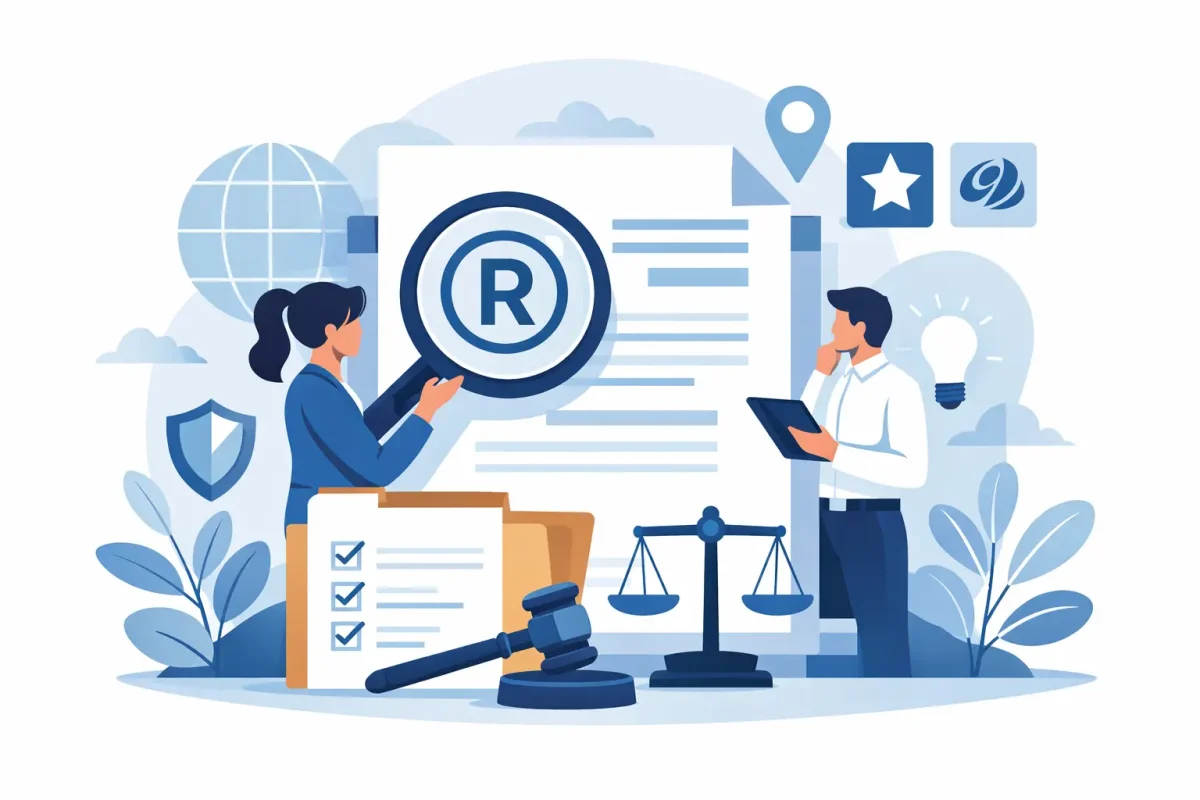
A business can spend months building a name, ordering packaging, reserving a domain, and launching ads – only to learn the USPTO sees the mark as too close to one already on file. That is why a trademark search before filing is not a formality. It is one of the most practical ways to reduce legal risk before you invest more time and money in a brand.
Many applicants assume the filing itself is the hard part. In reality, the better question is whether the mark should be filed at all in its current form. A strong application starts with a realistic look at conflict risk, not with a rushed submission.
Why a trademark search before filing matters
The USPTO does not approve marks simply because nobody copied the exact spelling. Examining attorneys look at whether a proposed mark is likely to cause confusion with an existing registration or prior-filed application. That analysis can turn on sound, appearance, meaning, and the relationship between the goods or services.
That is where many business owners get tripped up. They search Google, find no obvious duplicate, and assume the name is available. But trademark clearance is narrower in some ways and broader in others. It is narrower because trademarks are tied to specific goods and services. It is broader because similar, not just identical, marks can block an application.
A proper search helps answer a few business-critical questions. Is there a clear conflict that makes filing a poor use of money? Is the mark usable with some adjustments to the goods and services description? Is the name concept strong enough to justify moving forward? Those answers matter before you commit to packaging, signage, listings, or investor-facing branding.
What a trademark search before filing should actually cover
At a minimum, the search should include the USPTO database for live and relevant pending marks. But stopping there can leave gaps. Common law use can create risk even if a business never filed a federal application. State trademark records, business name registrations, marketplace listings, and industry use can all matter depending on the situation.
This is also where search quality matters more than search volume. Pulling hundreds of results is not the same as analyzing them. The real work is deciding which results are legally meaningful. A mark for restaurant services may not matter much to a software company, while a similar mark for an app, online platform, or closely related service might be a real obstacle.
An attorney-led search usually focuses on more than exact matches. It looks for phonetic equivalents, alternate spellings, plural forms, abbreviations, foreign language equivalents in some cases, and marks that create a similar commercial impression. That kind of review is harder to do with a quick self-search, especially if you do not know how USPTO likelihood-of-confusion analysis works.
Similar does not mean identical
One of the most misunderstood parts of trademark law is that conflicts often arise from marks that are not exact copies. For example, changing a letter, spacing two words differently, or using a synonym does not necessarily solve the problem. If consumers are still likely to think the brands come from the same source, the USPTO may refuse the application.
The goods and services analysis matters just as much. Two similar names can sometimes coexist if they operate in unrelated fields. On the other hand, even somewhat different marks can create trouble if they are used in closely connected markets. There is no universal rule. It depends on the total picture.
Common law risk is real
Federal filings get most of the attention because they are visible in the USPTO system. But unregistered users can still create problems. A business that has been using a name in commerce may have enforceable rights in its territory, and that can affect expansion plans, marketplace disputes, or future enforcement.
This is one reason a low-cost filing service is not the same as legal clearance. Administrative filing is only part of the process. The harder question is whether the name creates avoidable conflict risk. That is a legal judgment, not a data-entry task.
What happens if you skip the search
Sometimes applicants get lucky. Often they do not. If a mark is refused because of a prior registration or application, the filing fee is generally not refunded. The applicant may then face legal fees to respond, a need to rebrand, or both.
The cost of a bad filing goes beyond the USPTO fee. You may have already paid for logo design, labels, web development, packaging, or ad creative. If you are selling on Amazon, Shopify, Etsy, or other marketplaces, a naming conflict can disrupt listings and brand continuity at a bad time. For funded startups or growing brands, changing names after launch can also create confusion with customers and investors.
There is another issue that gets less attention. Filing a weak application can create false confidence. Business owners may act as though the brand is protected when the underlying mark was questionable from the start. A search helps you make a more informed decision before that happens.
DIY searching versus attorney review
There is nothing wrong with doing some early screening yourself. In fact, founders should absolutely test whether a name appears crowded before they get too attached to it. A basic check of the USPTO database, web search results, domain use, and marketplace presence can quickly reveal obvious problems.
But a self-search has limits. Most non-lawyers focus on exact wording and miss legally similar marks. They may also underestimate how goods and services overlap or fail to spot a pending application that could become a problem by the time their own application is examined.
Attorney review adds value because it connects search results to filing strategy. Sometimes the right advice is to move forward. Sometimes it is to revise the identification of goods and services. Sometimes it is to choose a different mark before spending more money. Clear advice at that stage can save much more than it costs.
For many businesses, this is the practical middle ground they want: real legal analysis without the uncertainty and pricing sprawl often associated with traditional firms. That is why attorney-led flat-fee services tend to make sense for companies that want cost clarity and stronger protection.
How to use search results to make a better filing decision
A search is only useful if it changes how you proceed. If the results show low conflict risk, that supports filing with more confidence. If the results show moderate risk, you may still file, but you should understand the trade-offs. Some businesses decide a mark is worth pursuing despite a possible refusal. Others would rather rebrand early than fight later.
If the results show high risk, treating that as good news is often the smartest move. You found the problem before a larger investment. A search that tells you not to file can be more valuable than one that clears the way.
This is also the right time to think about mark strength. Descriptive names can be harder to register and harder to enforce, even if no direct conflict appears. A more distinctive name often gives a business better long-term value. Searching and strategy work best together.
When timing matters most
The earlier you run a search, the more flexibility you keep. If you are still choosing among several names, a search can prevent expensive attachment to a risky option. If you are already in limited use, a search can help you decide whether to expand, file, or pivot.
Waiting until after a full launch is usually the costliest path. By then, even a manageable issue can feel urgent because so much branding work is already in market. Clearance is not just a legal step. It is part of business planning.
For founders who want a cleaner process, working with a trademark attorney early can reduce avoidable surprises. A firm like MyBrandMark.com can help evaluate the search, assess filing risk, and handle the application with licensed attorney oversight instead of simple form submission.
The smartest filing starts before the application
The strongest trademark applications usually begin with restraint, not speed. A trademark search before filing gives you a clearer view of the road ahead, including the risks that are easy to miss when you are excited about a new brand.
If your name is central to your business, treat clearance as part of the investment, not an optional add-on. A few careful steps at the start can spare you from rebuilding the brand after the market has already met it.