
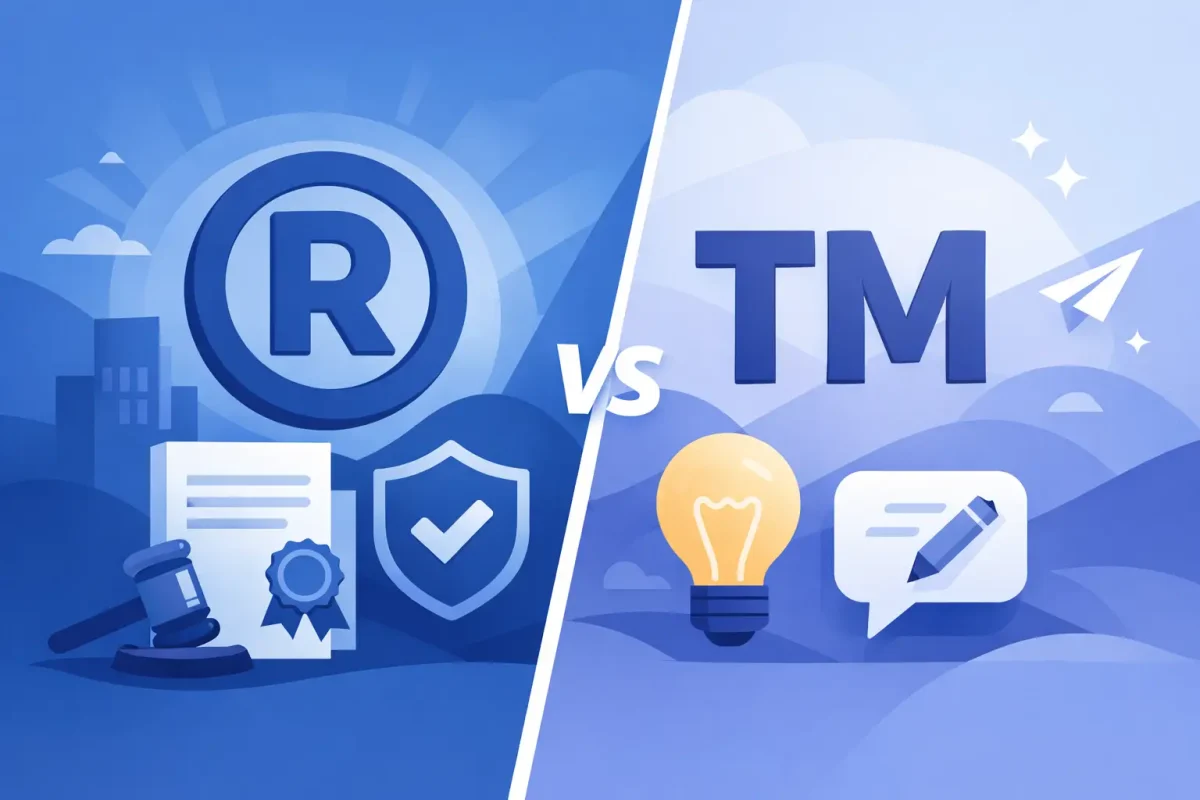
A lot of business owners put TM next to a name and assume they are fully protected. Then they find out a competitor has filed first, or worse, that they have been using the wrong symbol on packaging, ads, or Amazon listings. That is where the distinction between registered trademark vs tm stops being a small detail and starts becoming a real business issue.
If you are building a brand in the U.S., these symbols are not interchangeable. They signal different legal positions, carry different risks, and should be used at different stages of brand protection. Getting that right matters because customers, competitors, platforms, and the USPTO all treat trademark rights seriously.
Registered trademark vs TM: the short answer
TM means you are claiming trademark rights in a brand name, slogan, logo, or other mark, even if you have not registered it with the U.S. Patent and Trademark Office. It is commonly used for unregistered trademarks tied to goods.
The registered trademark symbol, which appears as the circled R, means the mark is federally registered with the USPTO. You should not use that symbol unless the registration has actually issued.
That difference is the core of registered trademark vs tm. TM is a claim. The registered symbol reflects an approved federal registration.
What TM actually does
TM is useful, but it is often misunderstood. It does not create federal registration, and it does not mean the USPTO has reviewed your mark. It simply tells the public that you consider the mark part of your brand and that you are asserting rights in it.
In the U.S., trademark rights can begin through actual use in commerce, not only through registration. That is why a business can use TM before filing anything. If you are selling products under a brand name, using TM can help put others on notice that the name is being used as a trademark.
Still, TM has limits. It does not give you the nationwide procedural advantages of a federal registration. It does not place your mark on the USPTO register. It does not automatically give you the same leverage when dealing with marketplaces, copycats, or enforcement disputes.
For a young business, TM can be a reasonable starting point. But it should not be confused with complete protection.
What a registered trademark gives you
A federal trademark registration gives you much more than a symbol. It gives you a formal legal asset backed by the USPTO. Once your mark is registered, you may use the registered symbol in connection with the goods or services covered by that registration.
That registration can strengthen your position in several ways. It creates a public record of your rights, supports nationwide priority benefits tied to your filing, and often makes enforcement more practical. It can also help deter later filers and improve your ability to challenge infringing uses on major sales and advertising platforms.
For many founders, this is the real turning point. Before registration, your rights may exist but can be narrower, harder to prove, and more expensive to enforce. After registration, your brand protection becomes clearer and more durable.
When you can use TM and when you can use the registered symbol
You can usually use TM as soon as you are using the mark in business and want to signal that it functions as a trademark. Many companies place TM next to a product name, logo, or tagline before filing with the USPTO and while an application is pending.
You cannot use the registered trademark symbol just because you filed an application. You also cannot use it because you believe your mark should qualify. You can only use it after the USPTO has issued the registration.
That timing matters. Using the registered symbol too early can be treated as a false claim of registration. At best, it makes your business look careless. At worst, it can create legal problems you did not need.
There is also a scope issue. If your registration covers specific goods or services, the registered symbol should be used in connection with those covered items. Businesses sometimes overextend their use of the symbol across unrelated offerings, which can create avoidable confusion.
Why businesses often get this wrong
The confusion usually comes from speed. A founder launches a brand, sees larger companies using symbols, and wants to look established right away. Online sellers also run into bad advice from forums, templates, or design agencies that treat TM and the registered symbol as branding choices instead of legal statements.
They are not style elements. They communicate status.
Another problem is that many filing platforms make trademark registration sound automatic. It is not. Filing an application does not equal approval, and approval does not happen instantly. There may be search issues, descriptiveness refusals, specimen problems, or conflicts with earlier marks. That gap between filing and registration is exactly why the symbol choice matters.
Which one is better for your business?
If you have not registered your mark yet, TM is the safer and more accurate option. It tells the market you are claiming rights without overstating your legal position.
If your mark is federally registered, the registered symbol is generally the stronger choice because it reflects a verified status and can reinforce the seriousness of your rights. But better does not always mean immediate. The right symbol depends on where your application stands and what protection you actually have.
This is where business owners should think strategically, not cosmetically. If your brand is central to your sales, product packaging, online listings, or investor-facing materials, relying only on TM may leave too much uncertainty. Registration is often what turns a brand from a marketing asset into a protectable legal asset.
Registered trademark vs TM in real-world situations
For an e-commerce seller launching a new product line, TM may be appropriate during the early stage while the mark is being used and evaluated. But if the brand starts gaining traction, registration becomes much more important because copycats move fast and platform disputes can get expensive.
For a startup raising money or expanding into multiple states, federal registration usually carries more weight than common law use alone. Investors, partners, and acquirers often want to know whether the core brand is actually registered.
For an established business rebranding, the biggest mistake is printing the registered symbol on signs, labels, and digital assets before the registration has issued. That can happen when marketing moves faster than legal review.
The common thread is simple. TM can mark your claim, but registration strengthens your position when the brand starts to matter financially.
The bigger risk is not the symbol
Most businesses focus on whether to use TM or the registered symbol, but the larger risk usually comes earlier. It is adopting a mark without a proper clearance review.
If another party already has stronger rights, using TM will not solve that. Filing for registration will not solve that either. You could spend on packaging, domain names, ad campaigns, and customer recognition only to learn that your mark conflicts with an existing registration or prior user.
That is why trademark strategy should start before filing and before rollout. A careful search and legal review can identify risks that a basic database check might miss. That step often saves far more money than it costs.
How to approach trademark protection the smart way
For most U.S. businesses, the practical path is straightforward. Choose a distinctive mark, clear it properly, use TM if you are actively using the brand before registration, file with the USPTO, and switch to the registered symbol only after registration issues.
The details matter, though. The right filing basis, goods and services wording, specimen support, and response strategy can affect whether your application moves smoothly or stalls in an office action. That is one reason many businesses prefer working with a real law firm instead of a filing-only service.
At MyBrandMark.com, the focus is on attorney-led trademark protection that gives businesses legal guidance, not just paperwork submission. For founders and growing companies, that can make the process more predictable and reduce the chance of preventable errors.
A strong brand deserves more than a guess about symbols. TM has its place. Federal registration has a different and much stronger one. The key is using each at the right time, with a real strategy behind the brand you are building.