
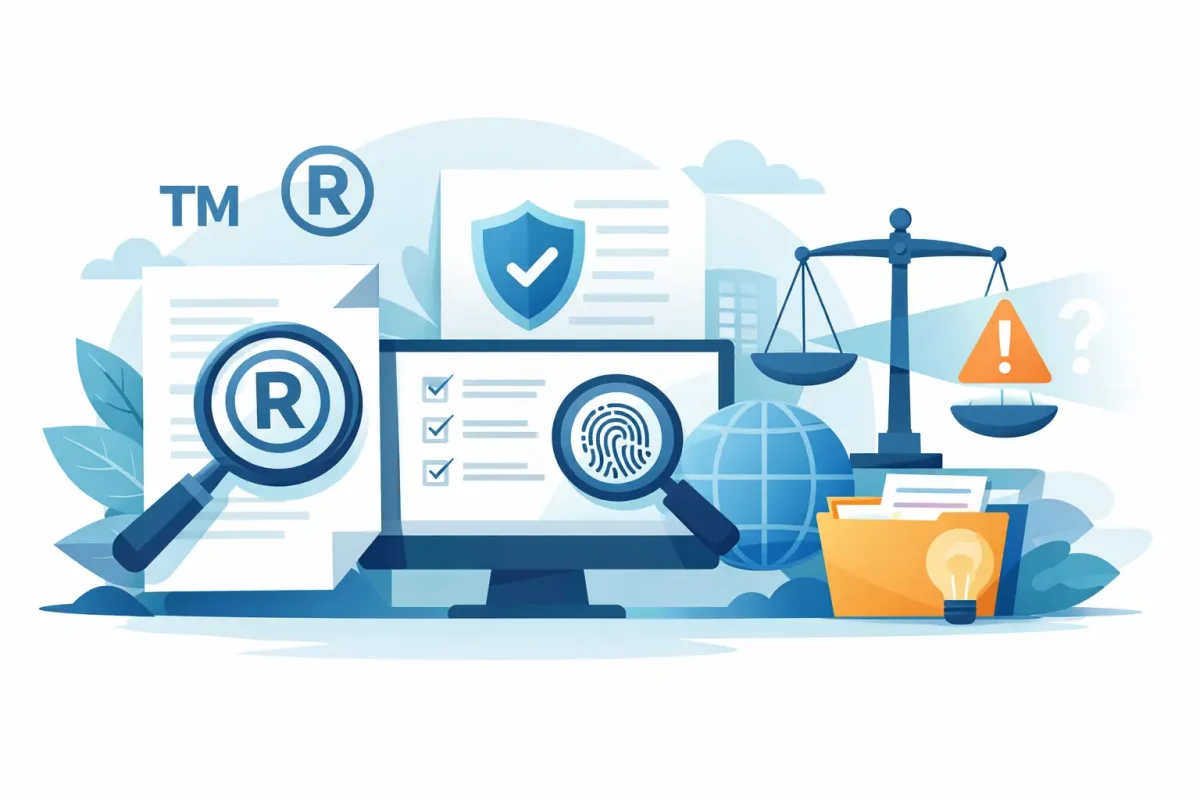
A name can look perfect on a pitch deck, product label, or storefront and still be a legal problem. That is why a comprehensive trademark clearance search matters before you file, launch, print packaging, or invest in marketing. If another business already has stronger rights in a similar name for related goods or services, the cost is not just a rejected application. It can mean a cease-and-desist letter, forced rebranding, lost inventory, and avoidable legal expense.
For many business owners, the first mistake is treating trademark clearance like a quick database check. A search of the USPTO records is useful, but it is not the same as a real legal clearance review. Federal filings tell only part of the story. Common law use, state registrations, business names, domain use, marketplace listings, and brand activity in the real world can all affect whether your mark is actually safe to use.
What a comprehensive trademark clearance search really covers
A comprehensive trademark clearance search is a risk assessment, not a guaranteed green light. Its purpose is to identify existing marks and uses that could create problems for registration or use in the marketplace. That includes names that are identical, close in sound, similar in appearance, or similar in meaning.
This matters because trademark conflicts are not limited to exact matches. Two brands can differ by a letter or a spelling twist and still be considered confusingly similar. The legal question is usually whether consumers are likely to believe the goods or services come from the same source, are affiliated, or are connected in some way.
A proper search also looks at the context of your business. The same name may be workable in one industry and risky in another. A conflict analysis depends on the mark itself, the goods or services involved, the channels of trade, and the strength of earlier rights. That is why a search is not just data collection. It requires legal judgment.
Why a basic search is often not enough
Many founders start with a quick online search, a social handle check, or a scan of the USPTO database. That is a reasonable first pass, but it often creates false confidence. If you only search exact wording, you can miss similar marks with alternate spellings, phonetic equivalents, plural forms, foreign language equivalents, or related brand families.
You can also miss conflicts that never show up in federal records. In the United States, trademark rights can arise from actual use in commerce, even without a federal registration. That means a business using a similar mark regionally or online may still have enforceable rights that complicate your launch.
This is one of the biggest differences between a filing platform and attorney-led legal review. A platform may help you submit an application, but filing alone does not answer whether your mark is a smart business choice. A real clearance analysis helps you understand the level of risk before you spend money building around the name.
What an attorney looks for in a comprehensive trademark clearance search
A strong search starts with the wording of the mark, but it should not stop there. The review usually expands to similar marks, related goods and services, and non-federal sources that could reveal prior use. The goal is to surface practical risk, not simply produce a stack of search results.
An attorney will usually evaluate whether a prior mark is likely to block your application or create use-based exposure. That includes examining how similar the marks are in sight, sound, and meaning. It also includes whether the goods or services are related enough that consumers could assume a connection.
The analysis becomes even more important with suggestive, coined, or stylized brands. A logo mark may look distinct visually but still contain wording that creates conflict. A name that feels original to a founder may still be too close to an existing brand when spoken aloud. These are the kinds of issues that software alone does not reliably sort out.
Federal registration risk and real-world use risk are not the same
One of the most useful parts of a comprehensive trademark clearance search is that it separates two related but different questions. First, can the mark likely be registered with the USPTO? Second, can the mark likely be used with an acceptable level of legal risk?
Those questions often overlap, but not always. A mark might appear registrable because no direct federal conflict shows up, yet still carry real-world risk because of unregistered prior use. On the other hand, a mark may face a registration issue based on a cited record, but the broader use risk may depend on details that deserve closer legal analysis.
This is where practical guidance matters. Business owners do not just need a search report. They need to know whether to proceed, modify the mark, narrow the goods or services, or walk away before investing further.
The trade-off between speed and certainty
Founders often feel pressure to move fast. Product launch deadlines, investor conversations, packaging orders, and ad campaigns can make clearance feel like a delay. But skipping or minimizing the search usually shifts the risk downstream, where it is far more expensive.
That said, not every business needs the same level of review at the same stage. If you are testing a concept internally, your risk tolerance may differ from a national e-commerce launch or a brand rollout tied to retail distribution. The right scope can depend on budget, timeline, and how central the mark is to your business.
Still, if the name is going on products, websites, paid ads, or customer-facing materials, a more complete clearance review is usually the prudent move. The earlier you identify issues, the more options you keep.
Common reasons business owners run into trouble
A frequent problem is falling in love with a name before checking whether it is available. Once packaging is designed, domains are purchased, and marketing starts, it becomes much harder emotionally and financially to change course. Another common issue is assuming that business formation approval or domain availability means trademark clearance. It does not.
Some businesses also focus only on whether the exact name is taken. Trademark law is broader than that. Similarity can exist across spelling variations, abbreviations, design elements, or related product categories. A search that ignores those factors can miss the very conflicts most likely to matter.
There is also a practical issue with self-directed searches: search results can be easy to find and hard to interpret. Seeing a similar mark does not automatically mean you are blocked. Not seeing one does not mean you are safe. The legal significance depends on context.
When to do the search
The best time for a comprehensive trademark clearance search is before filing and before public launch. Ideally, it happens when you have narrowed your choices to one or two serious brand candidates but before you invest heavily in them. That gives you room to pivot if needed without losing momentum.
If you already launched, it is still worth evaluating your position. A late search is better than no search, especially if you plan to expand, seek investment, or file a federal application. Waiting rarely improves the legal picture. It usually just increases the cost of fixing a problem.
What you should expect from the process
A worthwhile clearance process should give you more than raw results. You should come away with a plain-English assessment of the mark’s strengths, the likely conflict points, and the practical options available. That may include a recommendation to proceed, proceed with caution, revise the mark, or choose a different one.
This is where attorney involvement adds real value. Legal review is not about making the process more complicated. It is about reducing uncertainty and helping you make a business decision with better information. For many clients, that clarity is the difference between moving forward confidently and filing a brand application that was avoidably risky from the start.
At MyBrandMark.com, that attorney-led approach is central to the service. Clients are not just paying for paperwork. They are getting legal analysis designed to protect the brand they are building.
A strong brand deserves more than optimism and a quick search bar check. Before you put real money behind a name, make sure it has been tested the way a business asset should be tested – carefully, strategically, and with legal judgment behind it.