
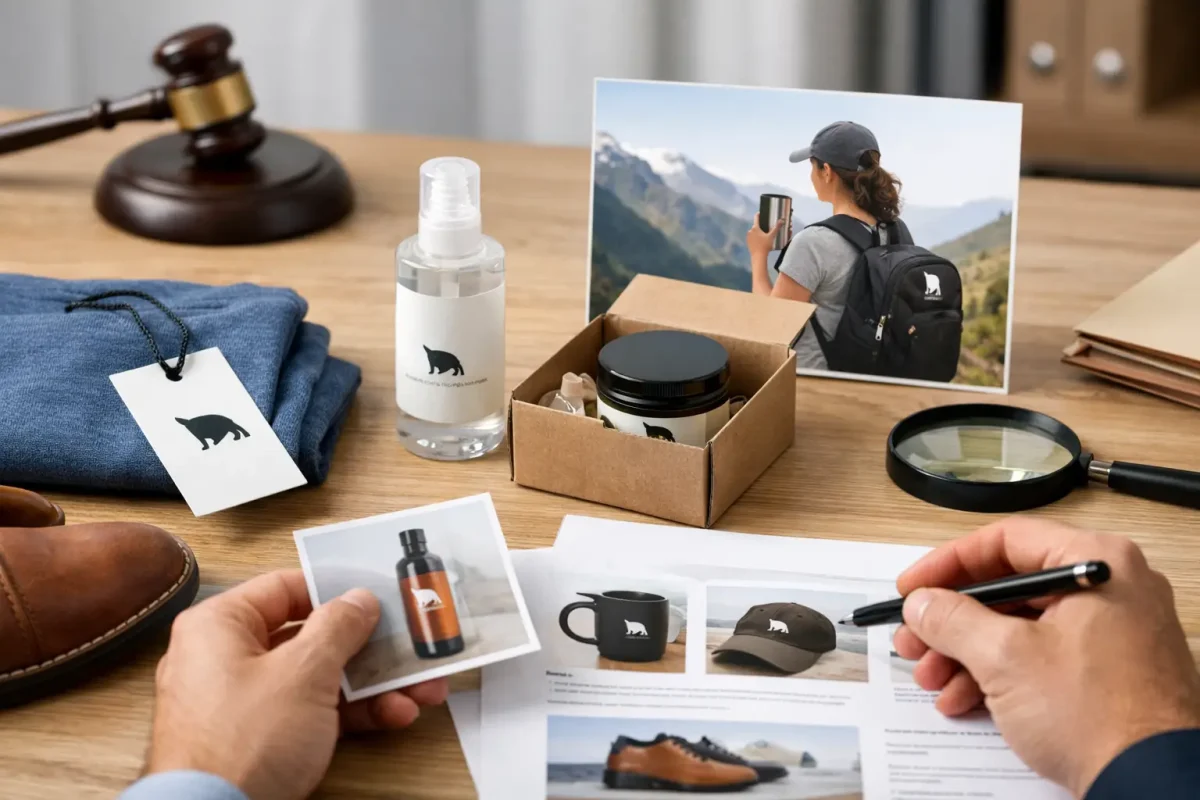
A trademark application can have a strong name, the right owner, and the correct class, then still run into trouble because the specimen does not show real-world use. If you are asking, “what is trademark specimen,” it is the evidence the USPTO uses to confirm that consumers encounter your trademark in connection with the goods or services in your application.
What Is a Trademark Specimen?
A trademark specimen is a real example of how you use your mark in commerce. It is not a mockup, a logo file, a business card by itself, or an idea for future use.
The USPTO reviews specimens to answer a practical question: does this material show the applied-for mark functioning as a source identifier for the listed goods or services? In plain terms, the evidence should show customers how the brand appears when they buy, order, or learn about what you offer.
A specimen is required when an application is based on current use in commerce. It is also required later in an intent-to-use application, before the mark can register, and during certain post-registration maintenance filings.
The mark shown in the specimen must generally match the mark in the application. Minor differences may be acceptable in some circumstances, but a substantially different spelling, logo, or commercial impression can create a refusal. The specimen also needs to support the specific goods or services identified in that class.
Why Does the USPTO Require a Specimen?
The USPTO requires a specimen because federal registration is tied to actual commercial use, not simply reserving a name. A specimen helps distinguish a functioning trademark from advertising that does not connect the mark to a real offering.
This requirement can feel technical, but it has a business purpose. A federal registration gives significant rights, so the USPTO wants evidence that the claimed brand is being used as customers would see it in the marketplace.
For example, a social media post announcing that a business is “coming soon” may show planned branding, but it usually does not prove current use for the advertised goods or services. Likewise, a website that only describes the company may not establish use for every item listed in an application.
What Makes a Good Trademark Specimen?
A good specimen clearly displays the mark and connects it to the relevant goods or services. It should look like genuine marketplace material, not evidence created only to satisfy the filing requirement.
For goods, the strongest examples usually show the mark on the product, its packaging, a label, tag, or a point-of-sale display. A photograph of a bottle with the mark on its label, for example, can work if the application covers the product in that bottle.
For services, the specimen commonly consists of a webpage, brochure, advertisement, or other material that shows the mark while clearly describing or offering the services. The material should do more than display a logo in a website header. It should make clear what service is available under that mark.
An online sales page may work for goods when it shows the mark, identifies the product, and provides a way to order it, such as a purchase button, price, or ordering information. A screenshot should include the webpage address and the date it was accessed or printed. Those details matter when the specimen is submitted to the USPTO.
Specimens for goods
For physical goods, the mark should normally appear on the goods themselves or on material associated with their sale. Packaging, labels, hangtags, and product displays are common examples.
A photograph of a shipping box can be acceptable only if it functions as product packaging or a point-of-sale display in context. A plain box with a mark added after the fact may not show trademark use for the actual goods. The question is always whether a consumer would encounter the mark as the brand of the product.
Specimens for services
For services, the mark needs to appear in advertising or promotional material that directly references the services. A consultant’s webpage describing consulting services under the mark is often more useful than a photograph of office signage with no explanation of what the business does.
Service specimens can be more nuanced because the service itself is not a physical product. The connection between the mark and the offering must still be clear. A webpage may need to show both the branded name and a meaningful description of the services available.
How Do Filing Bases Affect When You Submit a Specimen?
Your filing basis determines whether a specimen is due with the initial application or later. Choosing the wrong basis can delay the application or require a corrective filing.
The two bases most small businesses encounter are use in commerce and intent to use. Neither basis is automatically better. The correct choice depends on whether qualifying interstate or foreign commerce use has begun for the particular goods or services.
| Filing basis | When the specimen is submitted | What the applicant must be able to show | |—|—|—| | Use in commerce | With the initial application | The mark is already used in qualifying commerce for the listed goods or services. | | Intent to use | Later, before registration | The applicant had a good-faith intention to use the mark, then later begins qualifying use and submits proof. |
Use in commerce is not always the same as having a business entity, buying a domain name, or posting a brand announcement. The use must be connected to the identified goods or services and meet federal commerce requirements. A business that has started using a mark for one service should not assume that use supports unrelated services listed broadly in the application.
An intent-to-use application can be appropriate when a business is still preparing to launch. It does not eliminate the eventual specimen requirement. It simply moves that requirement to a later stage, along with additional timing and filing obligations.
What Are Common Trademark Specimen Problems?
The most common specimen refusals happen when the evidence does not show the mark used as a trademark for the listed items. The USPTO may also refuse specimens that are digitally altered, merely ornamental, or disconnected from the claimed goods or services.
A frequent issue is submitting a logo image by itself. A clean image of the mark may be useful in brand materials, but it does not show marketplace use. Another is using a webpage screenshot that shows the mark but no actual services, products, pricing, ordering path, or other commercial context.
The following problems are especially common:
- The specimen shows a different version of the mark than the application.
- The evidence refers to goods or services that do not match the application wording.
- The mark appears only as decoration, such as a large slogan across the front of a shirt, rather than as a brand indicator.
- A webpage shows a future launch, an unavailable product, or no way to purchase or order the item.
- The specimen was created or altered solely for the application and does not reflect ordinary commercial use.
A specimen refusal does not necessarily end an application. Sometimes the applicant has an acceptable substitute specimen that was in use by the relevant deadline. In other situations, the available options depend on the filing basis, the timing of use, and the wording of the refusal.
Can You Submit a New Specimen After a Refusal?
Often, yes, but the substitute specimen must meet strict timing rules. It generally must have been in use in commerce on or before the applicable filing date or statement-of-use date, depending on the stage of the application.
This is where businesses can get caught off guard. You usually cannot solve a specimen refusal by creating new packaging or launching a revised webpage after receiving the refusal, then represent that it was already in use earlier. Later-created material may be useful for future filings, but it may not cure the current problem.
The USPTO office action will identify the deadline for responding and explain the examiner’s concern. Missing that deadline can abandon the application. Before responding, it is useful to compare the application, the submitted specimen, the actual timeline of use, and the exact goods or services at issue.
Do You Need a Specimen to Maintain a Registration?
Yes, many registered marks require a specimen during maintenance filings. The USPTO uses this evidence to confirm that the mark remains in use for the goods or services kept in the registration.
A registrant typically files a declaration of continued use between the fifth and sixth year after registration, then files renewal-related maintenance documents at later intervals. A specimen is generally part of those filings. If the mark is no longer used for some listed goods or services, those items may need to be deleted rather than supported with inaccurate evidence.
This is one reason to keep ordinary records of current use, including product photographs, packaging, sales pages, service pages, and marketing materials. The best evidence is usually created as part of normal business operations, not rushed together when a deadline arrives.
FAQ
Is a logo file a trademark specimen?
No. A logo file alone usually does not show use in commerce. It must appear on goods, packaging, a sales display, or service-related advertising that connects the mark to the offering.
Can a website be a trademark specimen?
Yes, a website can qualify if it shows the mark and clearly offers the relevant goods or services. For goods, it should generally include a way to order or purchase the product, along with the URL and access or print date.
Can I use the same specimen for every class?
Sometimes, but only if the material genuinely shows use for the goods or services in each class. One webpage or product image often does not support every category in a broad application.
What if my product has not launched yet?
An intent-to-use filing may be an option if you have a good-faith plan to use the mark. You will still need to begin qualifying use and submit an acceptable specimen before registration can issue.
Does a specimen have to show interstate sales?
The specimen itself does not always visibly prove the full scope of commerce, but the underlying use must satisfy federal commerce requirements. Whether particular sales or services qualify can depend on the facts.
Treat the specimen as part of the application’s evidence, not an afterthought. Reviewing how your mark appears in the real marketplace before filing can prevent avoidable delays and help keep the application aligned with the business you are actually building.