A trademark application can look complete, carry the right filing fee, and still receive an office action. The most common trademark refusal triggers involve conflicts with earlier marks, weak wording, inaccurate goods descriptions, and proof that the mark is actually being used as claimed.
For a business owner, the practical question is not simply whether a name is available as a web domain or social handle. It is whether the name can function as a source identifier for the specific goods or services you want to claim and whether it creates a legal conflict with an earlier mark.
What are trademark refusal triggers?
Trademark refusal triggers are facts in an application or the USPTO record that cause an examining attorney to question or refuse registration. Some refusals can be addressed through a response or amendment, while others point to a conflict or a mark that may not be registrable as filed.
The USPTO examines each application after filing. The examining attorney reviews the mark, the identified goods or services, the filing basis, and the evidence submitted with the application. The review also includes a search for potentially conflicting registered and pending marks.
Which trademark refusal triggers appear most often?
Most refusals fall into a handful of recurring categories. Finding a trigger early does not necessarily end the project, but it gives you time to make an informed filing or branding decision before investing more in packaging, advertising, or a launch.
1. A confusingly similar earlier mark
Likelihood of confusion is one of the most frequent trademark refusal triggers. The USPTO may refuse an application when an earlier registration or pending application is similar in sound, appearance, meaning, or overall commercial impression and covers related goods or services.
The marks do not need to be identical. For example, related software services, clothing products, restaurant services, or online retail services can create an issue even when the names differ by a word, spelling, or design element. A clearance search is meant to identify these risks before filing, but no search can eliminate every possible concern, including unregistered common-law use.
2. The wording describes the goods or services
A mark may be refused if it merely describes an ingredient, quality, purpose, feature, function, or intended user of the goods or services. Generic wording – the common name for the product or service itself – cannot identify one business as the source and is not registrable as a trademark.
This issue often arises when a founder chooses a name that immediately tells customers exactly what the business sells. Descriptive terms may be useful in marketing, but they can be difficult to register on the Principal Register without proof that consumers have come to recognize the wording as a source identifier. The analysis depends heavily on the particular goods and services listed in the application.
3. The mark does not function as a trademark
The USPTO can refuse a mark that consumers are unlikely to see as identifying the source of goods or services. Common examples include ornamental wording on the front of a shirt, informational phrases, slogans that are widely used by many businesses, and wording used only as product decoration.
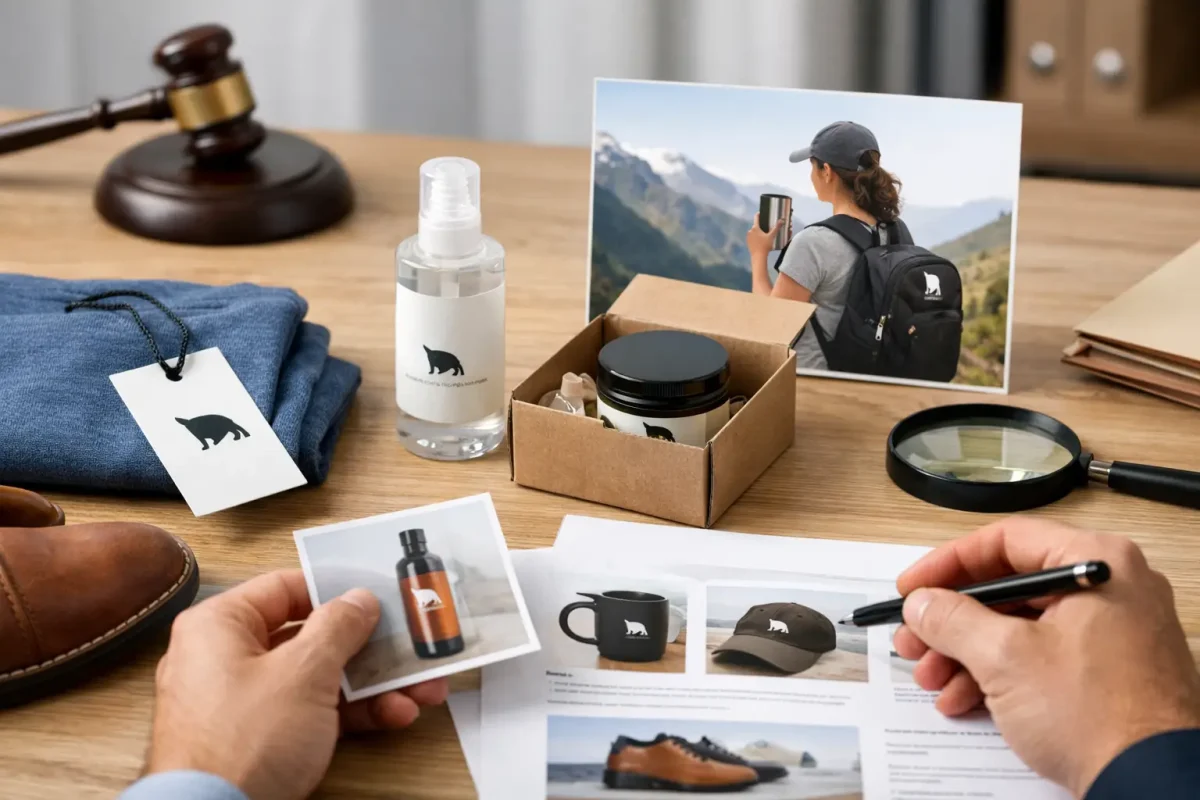
How the mark appears matters. A small brand name on a neck label, hangtag, product packaging, website header, or service page may function differently from the same phrase displayed prominently as a decorative message. This is why the application specimen is not a formality. It is evidence of real-world trademark use.
4. The specimen does not prove the claimed use
A specimen refusal means the submitted evidence does not show the mark used in commerce for the goods or services in the application. The specimen must connect the mark to the identified offering in a way customers would encounter in ordinary business.
For goods, acceptable evidence often includes labels, tags, containers, packaging, or a point-of-sale display. For services, it may include a website or advertisement that shows the mark and clearly describes or offers the services. A mockup, an internal document, a domain registration, or a social profile alone may not meet the requirement.
5. The goods or services are unclear or misclassified
The USPTO may require clarification when an identification is too broad, indefinite, or placed in the wrong international class. The application must state what you actually provide, using terminology the USPTO can accept.
This is more than a wording exercise. An identification that is too narrow can leave out relevant offerings, while an overly broad identification can create examination problems and may be difficult to support with real use. In many cases, an applicant can narrow or clarify the description, but generally cannot expand it after filing.
6. The filing basis and use dates do not match the facts
An application based on current use requires actual qualifying use in interstate commerce or commerce regulated by Congress as of the filing date. An intent-to-use application is available when there is a bona fide intention to use the mark, but it requires later proof of use before registration can issue.
Using the wrong basis can create avoidable delays and additional filings. A website that says “coming soon” or a single preparatory step may not establish use for every claimed product or service. The correct approach depends on what has actually been offered, where it has been offered, and how the mark appears in that offering.
7. The mark raises a geographic, surname, or other statutory issue
Some marks receive refusal because they are primarily geographically descriptive, geographically misdescriptive, or primarily merely a surname. These issues are fact-specific and can be less obvious than a direct conflict search.
A place name may be registrable in some contexts and problematic in others. The USPTO considers whether consumers would recognize the location and whether they would associate the goods or services with that place. Similarly, a surname analysis considers evidence about how the public is likely to perceive the wording, not just whether someone happens to have that name.
What happens after the USPTO issues an office action?
An office action explains the examining attorney’s objections and sets a response deadline. For many nonfinal office actions, the deadline is three months from the issue date, with a possible extension to six months if requested and the applicable fee is paid.
The response should address every refusal and requirement in the letter. Depending on the issue, an applicant may amend the identification, submit a substitute specimen, disclaim descriptive wording, provide evidence or legal arguments, or consider whether a consent agreement with another rights holder is appropriate. Not every refusal can be solved by argument, and a response should not make factual claims that the business cannot support.
| Filing approach | What it generally includes | What the applicant should confirm | |—|—|—| | Filing directly with the USPTO | The applicant prepares, files, and manages the application personally. | Search scope, correct class and filing basis, specimen rules, and responsibility for every deadline and response. | | Online filing service | A platform may prepare and submit an application based on information supplied by the customer. | Whether a licensed attorney reviews registrability, handles office actions, or is included only as an added service. | | Trademark attorney | A licensed attorney can assess the mark, advise on filing strategy, prepare the application, and respond to examination issues within the agreed scope. | The scope of the search, filing work, office action representation, and future maintenance services. |
How can you reduce refusal risk before filing?
The strongest time to evaluate refusal risk is before the application is submitted. A thoughtful review starts with the exact mark, then examines the actual goods or services, planned use, existing marketplace activity, and potentially conflicting records.
A basic search that checks exact wording may find obvious matches, but it may miss phonetic equivalents, alternate spellings, similar commercial impressions, related goods, and common-law uses. That does not mean every business needs the same level of search or analysis. A local service with a flexible brand may make a different risk decision than an e-commerce seller preparing national advertising, retail packaging, and inventory.
An attorney-led filing also helps establish a coherent record from the start. That includes choosing a filing basis supported by the facts, drafting an identification that matches the business, and planning for the evidence needed to show use. MyBrandMark.com works with businesses nationwide on those decisions, including founders in New Jersey and the surrounding metro area who want to speak directly with a trademark attorney.
Frequently asked questions about trademark refusal triggers
Can I file a trademark application if a similar mark exists?
You can file, but a similar earlier mark may lead to a likelihood-of-confusion refusal. The key questions are how similar the marks are, whether the goods or services are related, and what rights the earlier user or registrant has.
Does a USPTO refusal mean I must abandon my brand name?
No. Some office actions involve correctable issues, such as clarifying goods, revising a specimen, or disclaiming descriptive wording. A conflict refusal or a refusal based on the character of the mark may require a more difficult business decision, and the available options depend on the facts.
Can I change my goods or services after filing?
You can often clarify or narrow an identification to meet USPTO requirements. You generally cannot broaden the identification after filing to add new goods or services beyond the original scope.
Is a logo safer to register than a word mark?
Not automatically. A distinctive design can affect the comparison with earlier marks, but a logo application protects the design shown, while a word mark can protect the wording regardless of presentation. The right filing strategy depends on how the business actually uses its brand.
What if I miss an office action deadline?
Missing the deadline can cause the USPTO to abandon the application. Limited revival procedures may be available in some circumstances, but they have their own requirements and are not a substitute for tracking deadlines carefully.
A refusal is best treated as a specific legal and business question, not a reason to guess or panic. Reviewing the issue early gives you more room to respond thoughtfully, adjust where appropriate, and protect the brand you are building.